


At the Sustainability Institute we have witnessed many young people discover new ways of relating to their world because of an opportunity that was destined/meant for them.
And to understand how powerful one opportunity can be we need to look back in history. In 1976 South Africa witnessed the power of young voices against the unjust education system they were forced to endure. Today this education issue is mirrored in the economic conditions of exclusion and hopelessness facing many school leavers and graduates.
The comparison between the 1976 youth struggle and today’s green revolution reveals a shift from a fight for educational and political liberation to a struggle for economic inclusion and survival within a rapidly changing world. While the youth of 1976 protested against an oppressive education system, today’s youth face a “systemic disconnect” characterised by a 62.4% unemployment rate and a lack of career guidance that often leads to “hopelessness” even for those with qualifications.
How can the green economy help overcome this and what opportunities exist in the sector? This is a story about one young man and how his life was impacted by the ZIMI/SI EV learnership.
Taking a chance on the unknown
At 33, Neo was no stranger to job instability. He studied mechanical engineering because he has always been interested in cars and how they work. But various factors kept him working for businesses that did fireplace installations and pool maintenance and in retail. He also worked for his father’s carpentry business but when the furniture shop he worked for closed during the pandemic, he found himself unemployed.
As a traditional “petrolhead” who rebuilt his own car engine, Neo initially saw electric vehicles (EVs) as a “no-no”. But when a friend shared a link to Zimi’s EV Learnership Programme, his passion for cars and a desire to be at the forefront of something new pushed him to take a “chance on the unknown”.
Soft skills matter
The Electric Vehicle (EV) Learnership Programme, a collaborative initiative between ZIMI and the Sustainability Institute (SI), was his turning point.
Launched at the end of 2024 as a practical expression of South Africa’s Just Energy Transition, the formal call for learners was issued specifically targeting unemployed South African youth aged 18–35 from disadvantaged backgrounds.
The inaugural cohort of 6 learners all came from the Stellenbosch area.
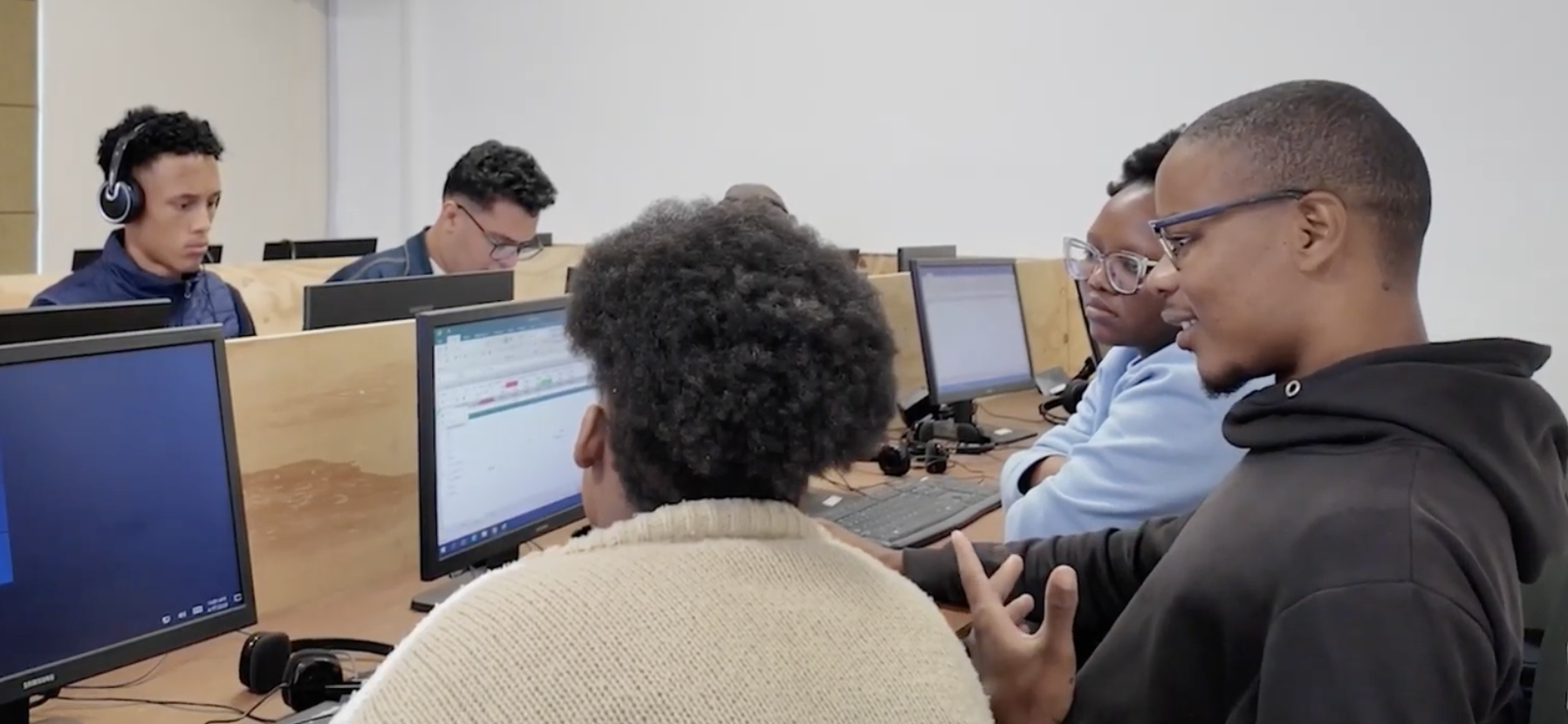
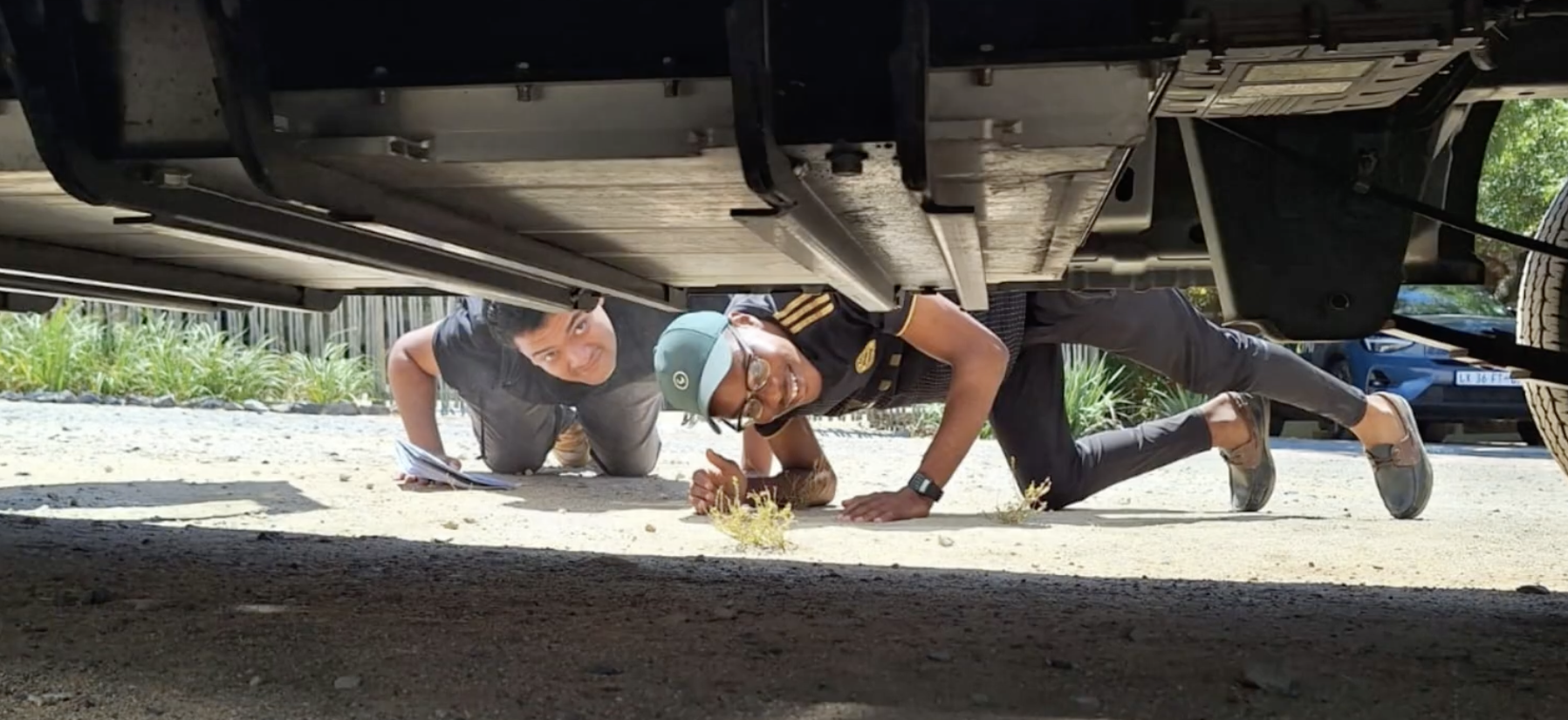
The curriculum provided a blended learning experience where participants acquired a diverse range of skills, including technical EV foundational knowledge (such as charging infrastructure, battery safety, and vehicle maintenance), computer literacy (mastering Microsoft Office and digital communication), and workplace readiness (including CV development and interview preparation). Crucially, the programme integrated personal development to build emotional intelligence and self-confidence, helping learners overcome the hopelessness often associated with high poverty and limited opportunity.
This opportunity reflects the transformative potential of the green economy in South Africa by demonstrating how green innovation and social inclusion can intersect to address the country’s 62.4% youth unemployment rate.
By bridging the gap between traditional education and the evolving demands of sustainable industries, the learnership created clear pathways into employment (over half of the participants went on to in-job training placements) and Neo transitioned into a permanent technical role.
His experience of the technology and the focus on developing other skills outside of the technical sphere has left an indelible mark and one that has set him up for the next stage of his life. He says it was the personal development and the unique environment of the SI that has made the deepest impression on his learning.
Neo says his class mates were very reticent to share of themselves and yet as the course progressed he was able to show his commitment to his community by helping his classmates share more of themselves as their confidence developed. In this way he became a leader and motivator. “Personal development helped me learn so much,” he reflects, noting the remarkable change in his peers as they moved from being too shy to present to confidently standing at the front of the room.
A career path in the Green Economy
After being in survival mode for so long Neo’s life looks radically different. In February 2026 he moved to Johannesburg to fulfill his role with Zimi as a permanent Technical Support Agent.
He monitors and manages high-tech data on electricity usage and fuel savings, charging infrastructure, provides driver support, and ensures that the EV logistics network stays active. He says he “feels truly valued”.
Hopes for the future
Neo feels he has finally “found his home” and is curious about the EV sector in South Africa and what career options it can offer. Whilst the infrastructure needed to recharge EV cars is still developing, he knows he has a future worth dreaming of and this includes becoming a homeowner perhaps one day, acquiring the car of his dreams (a Porsche).
As we reflect on the legacy of June 16th, Neo’s thoughts and advice to youth struggling to find their way is: “You shouldn’t stop trying”.
In 1976, the struggle was one of resistance. It has evolved into how to have personal agency and the correct skills for youth from disadvantaged backgrounds, to find their “seat at the table”, or build their own table in entrepreneur roles and fill the systemic gaps that exist. This can be achieved by ensuring the “skills mismatch” is addressed by programmes that help guide youth on their next journey.
Overcoming “hopelessness” and trauma
The majority of South African youth come from environments marked by poverty and trauma. This context makes it impossible to imagine a better future.
While the 1976 generation fought external systemic oppression, today’s youth must also overcome the internal “hesitation” and “sense of giving up” that comes from limited opportunities. Programmes that enable personal development as part of their curriculum can help learners like Neo Ubisse transition from “survival mode” to feeling “truly valued” in a high-tech sector. To learn from the Zimi/SI EV learnership, please view the story and case study.
Ultimately, while the 1976 generation fought for the right to a fair education, today’s green revolution is fighting to make that education meaningful and productive in a sustainable, future-ready economy.