


Interview and reflections from Shaun Dunn, Programme Leader: Diploma in Sustainable Development at Stellenbosch University and trustee of the SI.
Inside the spaces where identity shifts, hierarchies dissolve and the next generation of change-makers find their voice.
The Sustainability Institute (SI) is a praxis hub to Stellenbosch University’s three-year Undergraduate Diploma in Sustainable Development. As such, it offers the space for a series of place-based learning sessions during the curriculum.
These sessions are an essential part of the student’s ability to connect with the principles of social and environmental sustainability and take place at the SI’s grounds where there are living examples of these principles, an indigenous garden, woodlands and creative studio.
Across all years of the diploma, the SI’s place-based learning approach consistently invites the undergraduates to step outside into a living, breathing classroom. Whether harvesting kei apples, propagating indigenous seedlings, making pinch pots or debating food systems, students are met as whole people who are curious, creative and capable of contributing to the world they are learning to understand.
The three-year diploma programme is structured around two semesters per year and students enrol for various modules like sustainable design technologies, eco literacy and regenerative leadership. Activities are designed to engage students across their heads, hearts and hands, connecting academic learning to lived experience in Nature, community and connectivity.
All of this happens within a space that has been carefully tended and curated over the past 25 years and is a living example of how nature regenerates and supports our human design.
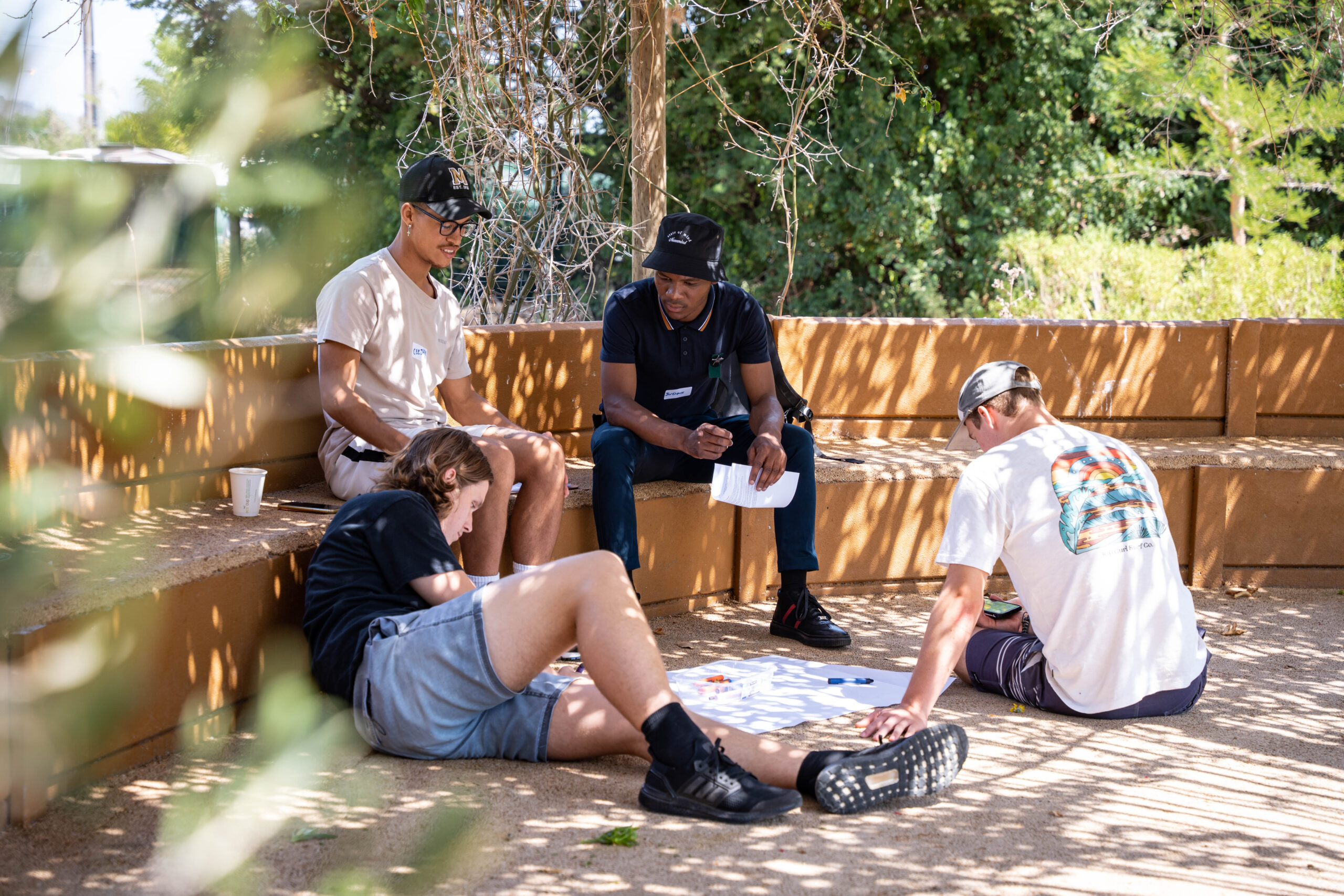
Shaun Dunn has been a facilitator for the diploma since 2019 and shares his insights into what makes this course so transformational, and how it teaches things way beyond what a text book could.
Shaun first encountered the Sustainability Institute in 2012 arriving as a former high school teacher searching for a more meaningful path, one that aligned with a deep personal calling to contribute to the earth. The moment he stepped onto the SI campus he felt an immediate sense of belonging, a visceral recognition that he was exactly where he was supposed to be.
That experience shaped everything that followed: a Master’s research journey that took him to Tanzania to work with traditional healers and enabled him to work with San youth developing their skills in hospitality and on-site tourism before returning to Stellenbosch University to facilitate and lecture on modules in systems thinking, regenerative leadership and eco-literacy.
In the classroom and in the woodlands, Shaun describes himself as a conduit who helps younger students reconnect with knowledge they already carry intuitively.
He observes this most clearly in the “sit spot” practice, where students who begin distracted and anxious gradually (he says by about the 6th session), put their phones away of their own accord and begin to find genuine stillness in nature.
For students who have never had the space to reflect in nature, the SI consistently surprises them; they discover that a place can make them feel seen rather than like a number, and that becoming eco-literate is not an academic exercise but a lived recognition that they are part of the web of life.
At the SI, the land itself changes the dynamic. There is a tangible difference in energy because the space allows students to “breathe and catch their breath” before any learning begins, creating the conditions for genuine connection and presence.
One protects and nurtures what one loves and to witness the awareness unfolding is magical.
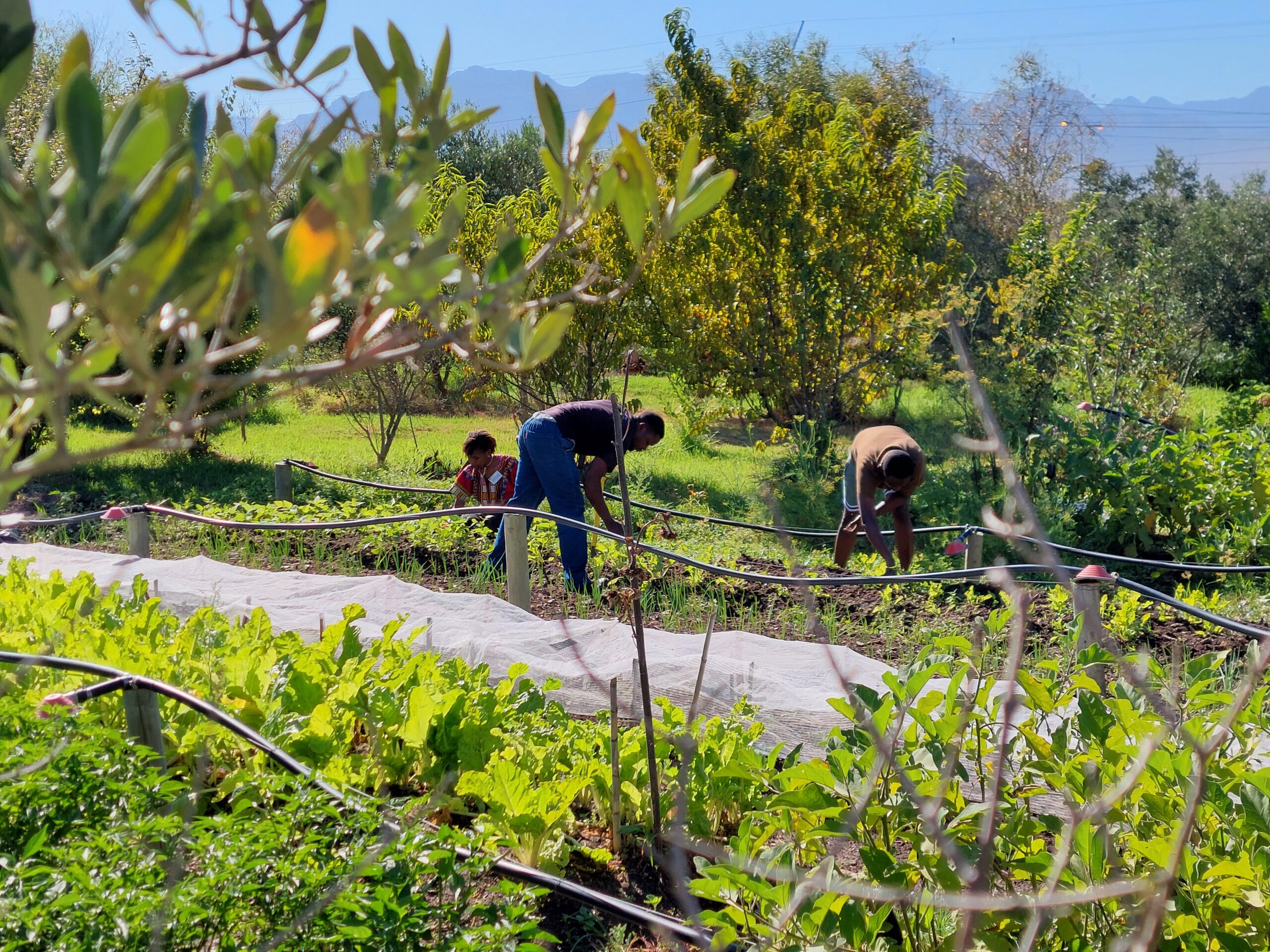
This is not incidental; it is pedagogical. The interior shift that transformative learning requires happens through direct experience like the ilima sessions. In these sessions students engage with all aspects of food production like harvesting vegetables from the garden that are then cooked in school meals and also served at the Green Café. These practices help them understand “the labour, the human component and the land component,” and what it takes to clean their own learning spaces.
As Shaun puts it, “here everyone makes the tea and hierarchies are disentangled by what you actually do.” This dismantling of extractive habits and managerial assumptions is part of the learning.

The diploma is also deliberately designed for a BANI world. BANI is an acronym and framework coined by futurist Jamais Cascio to describe the chaotic, unpredictable, and overwhelming nature of the modern world. Standing for Brittle, Anxious, Nonlinear, and Incomprehensible, it is a progression in description from the VUCA world, defined by volatility, uncertainty, complexity and ambiguity.
Place-based learning teaches them how to “work within the chaos and instability” and become explorers of their world to see where their skills can make the most difference.
The curriculum is transdisciplinary and a day per subject allows the slowness to teach. It’s no longer about studying something and then being able to do it. We are in an uncertain time and so the students adapt and become change agents in this process where they are.
Shaun reflects on the experiences of four students who went to China. One joined a language course and the other three joined a business course. Their feedback was that they “held their space” amongst senior students who were exploring applications for the MBA programme at Xiamen Uni. All returned changed and with a revised sense of self and what is possible for them.
The content aims to be Afro-Centric, which creates a different reality and gives students the grounding to challenge solutions that are generally accepted. By bringing an Afro-centric stance into problem-solving other solutions emerge very comfortably.
As Shaun reflects, “the space within the SI allows these dreams and passions to be ignited” because you cannot get anyone to love nature without them first experiencing it.
At the SI, that experience is everywhere: in the garden and woodlands, the mix of cultures laughing and caring for each other, the indigenous foods served at the Green Café, and the biodiversity you encounter simply by arriving.
