


Insights by Jessica Eley, Schools Coordinator at the Sustainability Institute
South Africa is facing unprecedented challenges: climate change, water shortages, unemployment and a loss of connection to the incredible natural world that nurtures and provides for us. In this context we need a generation equipped with the skills and mindset to navigate these complexities and discover pathways to better futures.
Montessori education, with its emphasis on holistic development, experiential learning, and social responsibility, offers a powerful framework for cultivating the minds of young learners so that they have agency to act and to innovate.
This is where its greatest potential lies. South Africa’s education system is failing its learners and the existing socio-economic inequality deeply affects early learning. Montessori pedagogy offers a child dignity, regardless of their socio-economic status. It allows for them to develop personal agency from the very beginning which enables them to make their own decisions and to discover that their actions matter. Mixed environments encourage leadership and collaboration that add up to community responsibility.
In under-resourced communities, Montessori principles can be adapted without expensive materials. What matters most is the philosophy that the child is respected, there is order and beauty in the environment, there is consistency and a high expectation of belief. When implemented thoughtfully, Montessori is not elitist, it is transformative.
What are the 5 main differences between Montessori and a normal ECD approach to learning?
The approach developed by Maria Montessori differs from mainstream Early Childhood Development (ECD) models in five key ways:
- Child-led vs teacher-directed learning. Montessori classrooms are guided by the child’s interests and developmental readiness, fostering independence and a lifelong love of learning. Traditional ECD settings often follow a pre-set daily programme led by the teacher.
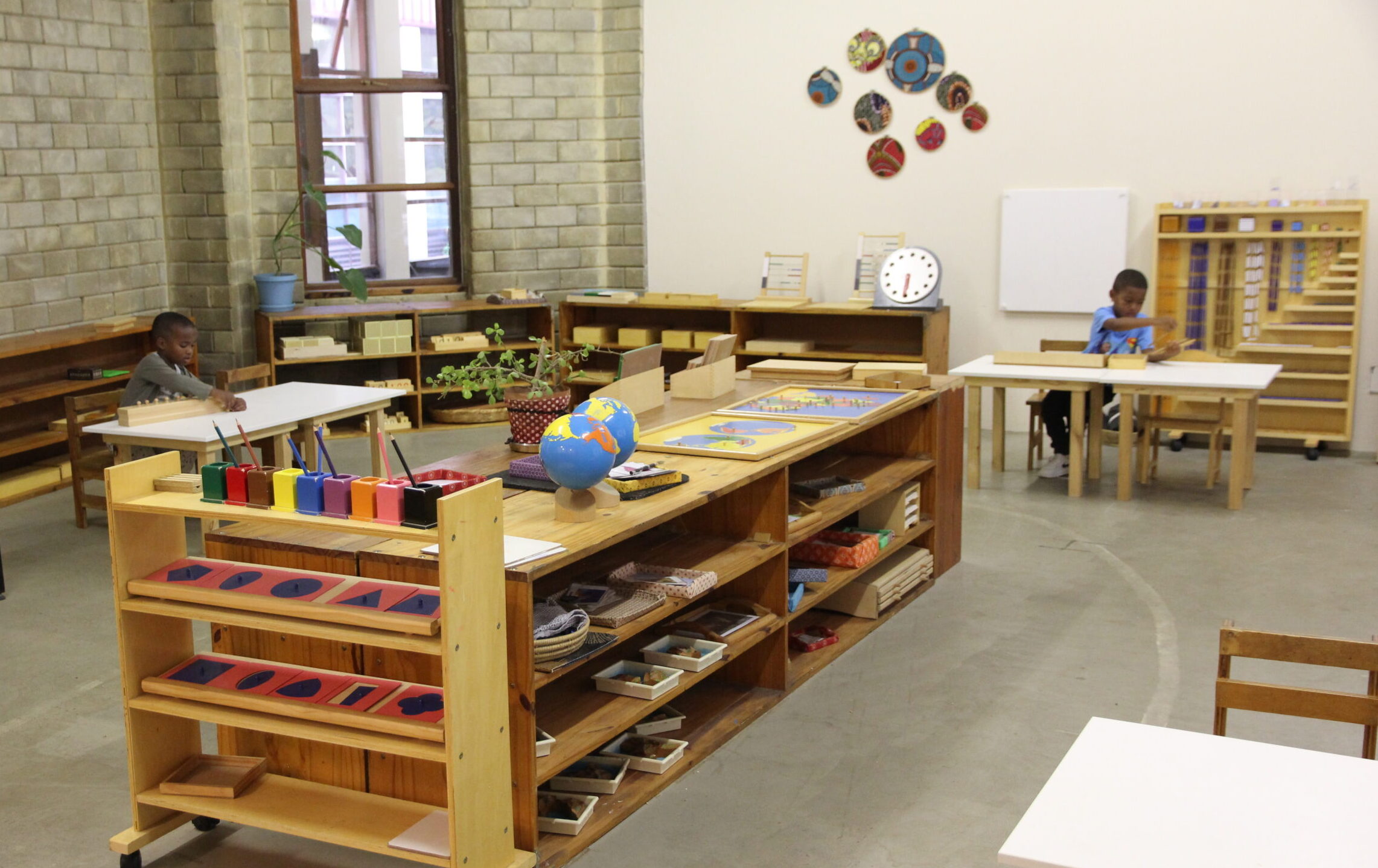
- Prepared environment vs activity rotation. In Montessori, the classroom is carefully designed with specific, purposeful materials that children choose independently. This enables the child to develop independence, self-discipline, and deep concentration. In many conventional ECD classrooms, activities are rotated by the teacher according to theme planning.
- Deep concentration vs surface coverage. Montessori encourages uninterrupted work cycles (often 2–3 hours), allowing children to develop focus and mastery. Traditional settings typically shift children between shorter activities.
- Mixed-age grouping vs same-age classes. Montessori environments group children across three-year age spans, encouraging peer learning and leadership. Most ECD models group children strictly by age.
- Independence as a goal vs compliance as a goal. Montessori prioritises independence, self-discipline and intrinsic motivation. Mainstream models often focus more heavily on behaviour management and external reward systems.
What does learning look like in a Montessori classroom — and how is it different?
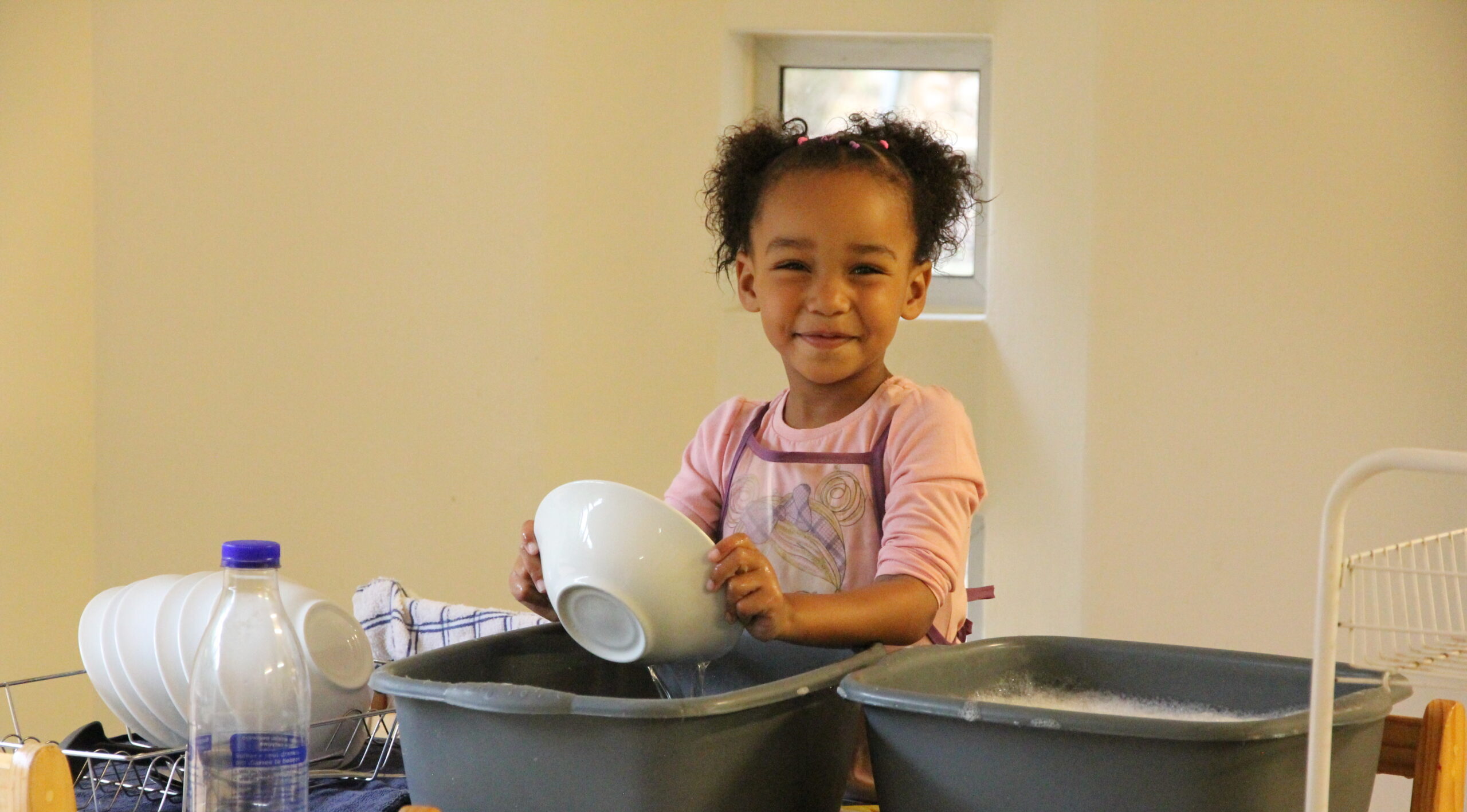
In a Montessori classroom, learning looks calm, purposeful and deeply engaged. If you were to peep your head into an environment, you may see children polishing a table, a child working with the sandpaper letters and another child choosing what work they will want to do next. There is movement but there is order and it does not look chaotic. In contrast, in traditional ECD settings you will often see a teacher giving the entire group instructions on the carpet, the whole class doing the same thing at the same time, teacher-led weekly themes and short lessons or activities. Montessori replaces teaching to the group with guiding the individual child.
What are the most important areas to focus on in the earliest years?
The earliest years (0–6) are foundational for life, not just school readiness. The most important areas are:
- executive functioning
- language development
- movement and coordination
- independence and self-belief
Montessori refers to this stage as the “absorbent mind”, a period when children unconsciously construct themselves through their environment. Rather than rushing academics, the focus is on building the internal architecture for lifelong learning.
How does Montessori understand the child differently from mainstream ECD models in South Africa?
Montessori sees the child as naturally capable, internally motivated, driven towards development and growth. In many mainstream models and particularly in under-resourced South African contexts, children are often viewed through a deficit lens: what they lack, what they need to catch up on, what skills they do not yet have.
Montessori shifts this narrative. It assumes competence first. It asks: What is already present in this child? What strengths are emerging? This shift has profound implications for children from vulnerable backgrounds.
How does Montessori support holistic development beyond academic readiness?
Montessori education develops the whole child — intellectually, socially, emotionally and physically. Through the Montessori way of learning a child learns how to take care of themselves, to be independent, social responsibility, conflict resolution skills and confidence in themselves. Academic skills emerge naturally from this foundation. Reading and maths are outcomes, not starting points.
What role does the teacher play in Montessori — and how does this shift traditional teaching authority?
In Montessori, the teacher is not the centre of the classroom. Rather they act as the observer, a guide, they protect the concentration in the class and prepare the beautiful environment each day. Rather than managing behaviour through rewards and consequences, children are supported in developing internal discipline. This fundamentally redefines power dynamics in the classroom. In a traditional classroom the teacher teaches, they determine the structure of the classroom and all are expected to move in the same direction.
Montessori education also fosters social justice awareness by promoting inclusivity, empathy, and a sense of active citizenship. Children learn about different cultures, perspectives, and social issues through stories, discussions, and collaborative projects. They are encouraged to challenge injustice and work towards a more equitable world.
Learning principles for creating better futures
Several key Montessori principles contribute to cultivating ecological intelligence and social justice:
- Hands-on learning: Children learn best through direct experience and exploration.
- Self-directed learning: Children are encouraged to follow their interests and learn at their own pace.
- Collaborative learning: Children learn from and with each other, encouraging cooperation and communication skills.
- Respect for all living things: Children develop a sense of empathy and responsibility towards the environment and all its biodiversity.
By integrating these principles into the classroom, educators can empower children to become agents of change, equipped with the knowledge, skills, and values to create a thriving and just world for all.
Watch this video to see how learning unfolds in the Lynedoch Children’s House.